Reducing Deposit Drop-offs in a Multi-Network Crypto Platform
Reducing Deposit Drop-offs in a Multi-Network Crypto Platform
Making deposits simple and clear for new onboarding users and existing users
What We Solved
What We Solved
This project focuses on Redesigning the GTR Trade deposit experience to reduce user confusion around networks and balances, simplify asset selection, and create a smoother path for users to fund their trading accounts.
Overall business impact
Overall business impact
38%
38%
Deposit Flow Drop-offs
40%
40%
Deposits via Fast Forward
Deposits via Fast Forward
+21%
+21%
First-Time User Deposits
First-Time User Deposits
+27%
+27%
Users Starting Trades
After Deposit
Users Starting Trades
After Deposit
My role
My role
This project focuses on redesigning the GTR Trade deposit experience to reduce user confusion around networks and balances, simplify asset selection, and create a smoother path for users to fund their trading accounts.
This project focuses on redesigning the GTR Trade deposit experience to reduce user confusion around networks and balances, simplify asset selection, and create a smoother path for users to fund their trading accounts.
This project focuses on redesigning the GTR Trade deposit experience to reduce user confusion around networks and balances, simplify asset selection, and create a smoother path for users to fund their trading accounts.
Collaboration with
Collaboration with
Product Managers
Product Managers
Blockchain Engineers
Blockchain Engineers
Backend Developers
Backend Developers
Growth Team
Growth Team
PROBLEM STATEMENT
PROBLEM STATEMENT
What can be improved?
What can be improved?
Only 60% of users successfully complete the deposit flow, while the remaining 40% drop off before funding their account. The primary reason is confusion around selecting the correct network, asset type, and product-specific balance, creating friction during the deposit process.
Only 60% of users successfully complete the deposit flow, while the remaining 40% drop off before funding their account. The primary reason is confusion around selecting the correct network, asset type, and product-specific balance, creating friction during the deposit process.
Who should care?
Who should care?
Our primary users are crypto traders who want to quickly fund their accounts and start trading without confusion or delays.
Our primary users are crypto traders who want to quickly fund their accounts and start trading without confusion or delays.

Hello! I am Alex
I am a 27-year-old crypto trader who actively trades derivatives and spot markets. I manage funds across different networks and exchanges and want to quickly deposit funds when I see trading opportunities.
I am a 27-year-old crypto trader who actively trades derivatives and spot markets. I manage funds across different networks and exchanges and want to quickly deposit funds when I see trading opportunities.

Hello! I am Ryan
I am a 24-year-old new crypto user who recently started exploring trading. I want to buy and trade crypto, but I am still learning how deposits, networks, and tokens work.
I need a simple and guided way to deposit funds so I can start trading without confusion.
I am a 24-year-old new crypto user who recently started exploring trading. I want to buy and trade crypto, but I am still learning how deposits, networks, and tokens work.
I need a simple and guided way to deposit funds so I can start trading without confusion.
Why deposit on GTR Trade?
Why deposit on GTR Trade?
I want a platform where I can:
Deposit funds quickly without network confusion
Clearly understand which asset works for each product
Start trading immediately after depositing
Trust that my funds are safe and credited correctly
I want a platform where I can:
Deposit funds quickly without network confusion
Clearly understand which asset works for each product
Start trading immediately after depositing
Trust that my funds are safe and credited correctly
OUR RESEARCH METHODS
OUR RESEARCH METHODS
How did we discover the problems?
How did we discover the problems?
Product analytics
Product analytics
Analyzed deposit funnel data to identify drop-off points.
Analyzed deposit funnel data to identify drop-off points.
Session recordings
Session recordings
Observed how users interacted with the deposit flow.
Observed how users interacted with the deposit flow.
Customer support insights
Customer support insights
Reviewed support tickets to understand common deposit issues.
Reviewed support tickets to understand common deposit issues.
User interviews
User interviews
Spoke with traders to understand confusion around networks and balances.
Spoke with traders to understand confusion around networks and balances.
What do we want to achieve?
What do we want to achieve?
Clarify the difference between Assets and Available to Trade balance.
Clarify the difference between Assets and Available to Trade balance.
Increase successful deposits & reduce drop-offs in the deposit flow.
Increase successful deposits & reduce drop-offs in the deposit flow.
Help users understand which USDC is required for each product.
Help users understand which USDC is required for each product.
Simplify the deposit experience for first-time users.
Simplify the deposit experience for first-time users.
1/7
1/7
Assets vs Available to Trade Clarity
Assets vs Available to Trade Clarity
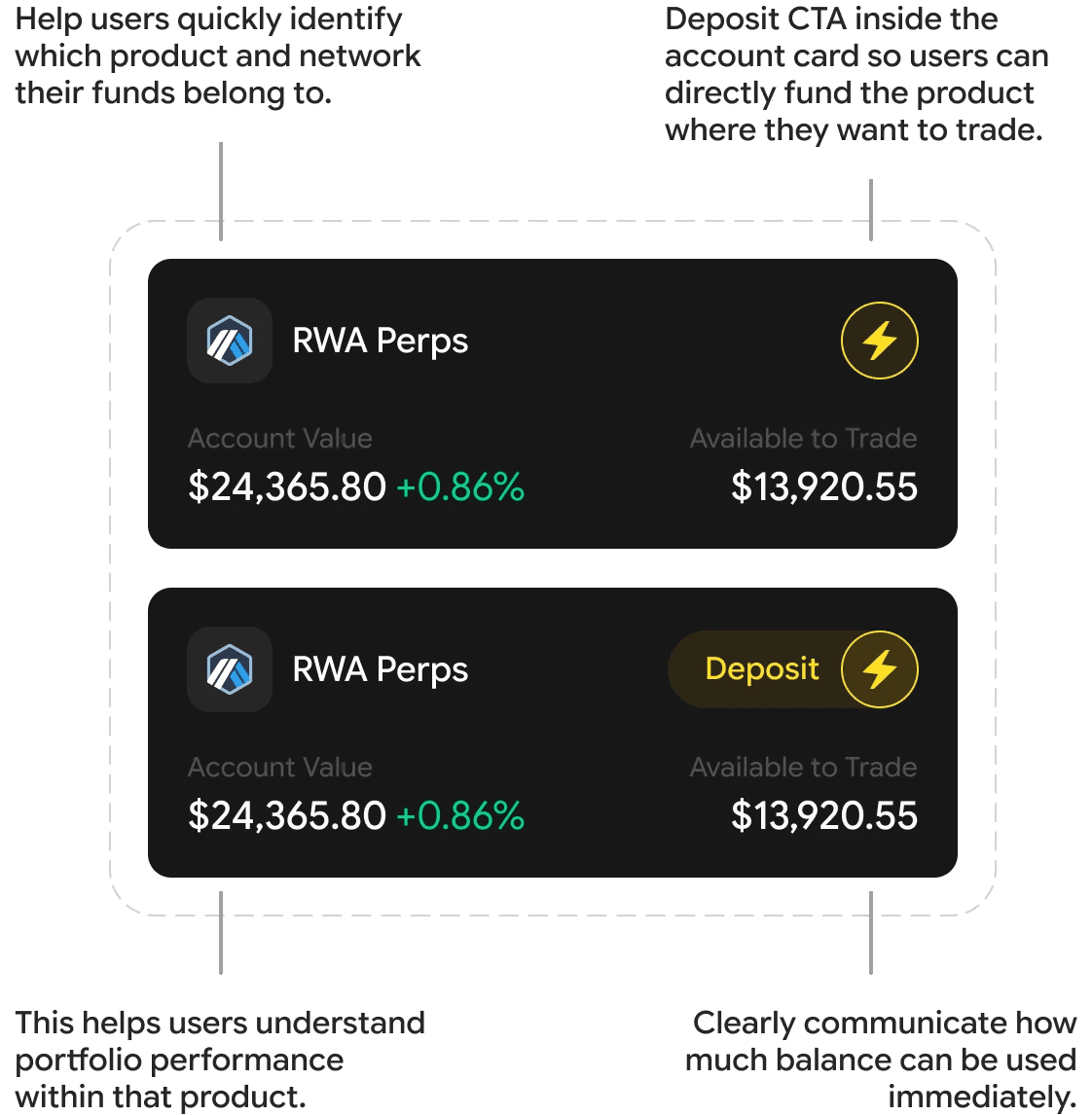
Users often struggled to understand the difference between their total assets and available-to-trade balance across different products.
Since funds could be allocated to different products and networks, users were also unsure where their deposited funds were actually going. This created confusion after deposits and reduced user confidence in the platform.
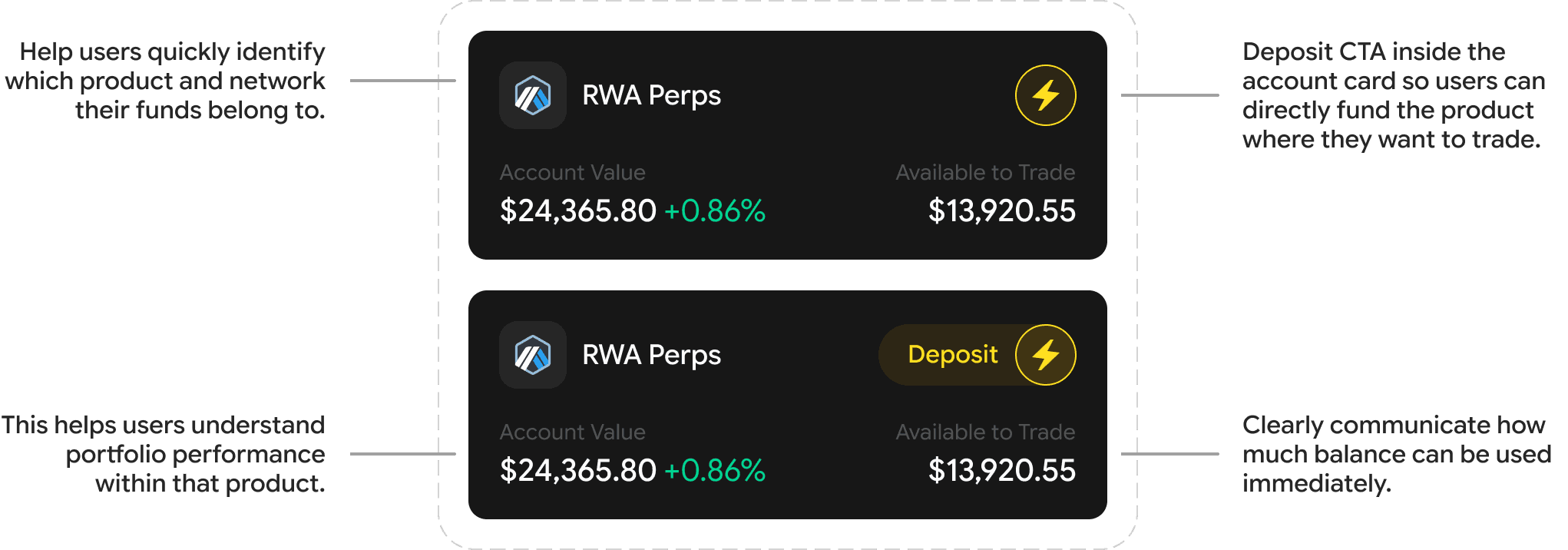
To solve this, we redesigned the balance structure to clearly separate total assets, product balances, and available-to-trade funds, helping users understand exactly where their money is stored and how it can be used.
Users often struggled to understand the difference between their total assets and available-to-trade balance across different products.
Since funds could be allocated to different products and networks, users were also unsure where their deposited funds were actually going. This created confusion after deposits and reduced user confidence in the platform.
To solve this, we redesigned the balance structure to clearly separate total assets, product balances, and available-to-trade funds, helping users understand exactly where their money is stored and how it can be used.
Users often struggled to understand the difference between their total assets and available-to-trade balance across different products.
Since funds could be allocated to different products and networks, users were also unsure where their deposited funds were actually going. This created confusion after deposits and reduced user confidence in the platform.
To solve this, we redesigned the balance structure to clearly separate total assets, product balances, and available-to-trade funds, helping users understand exactly where their money is stored and how it can be used.
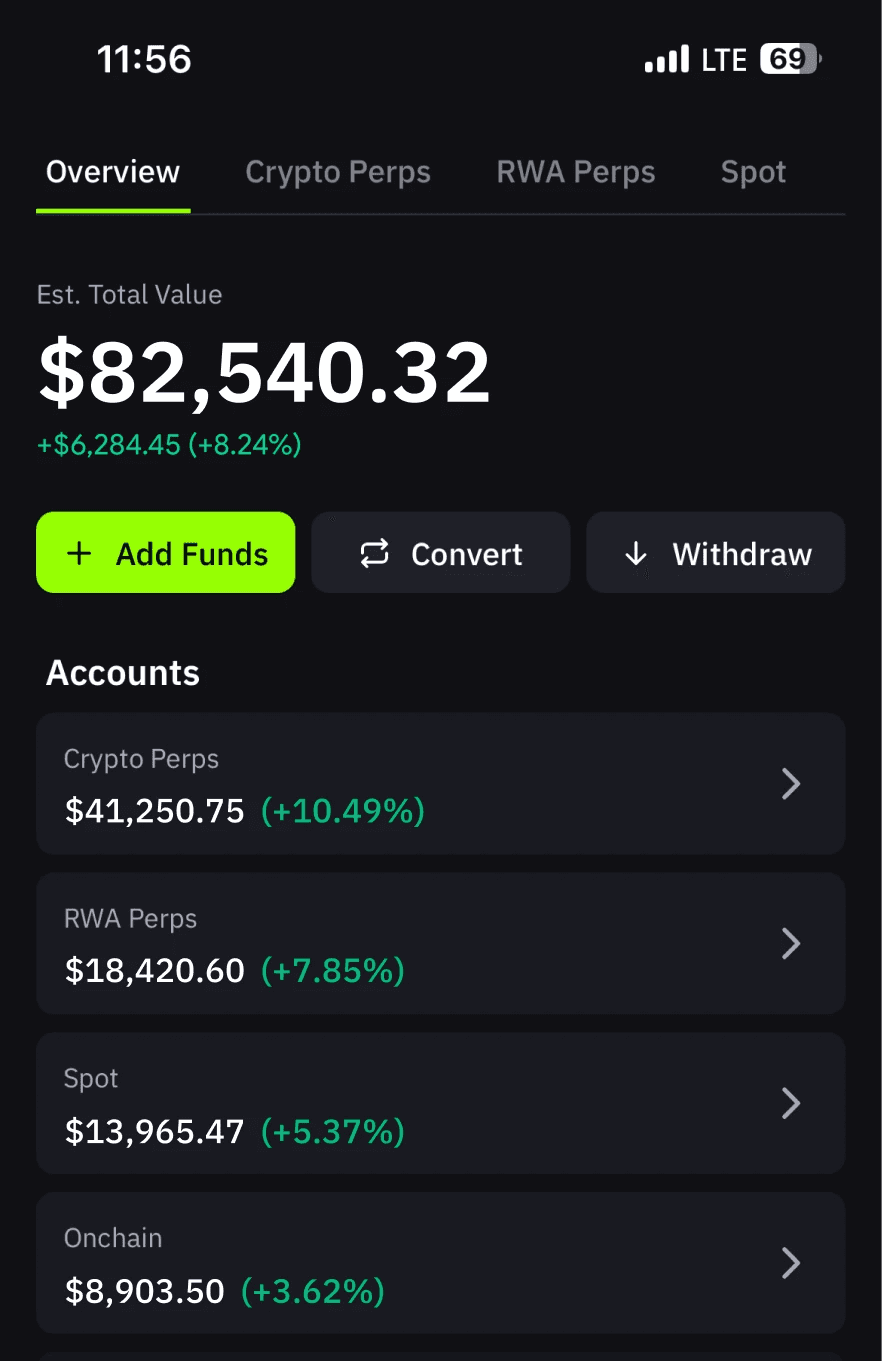
Before
Users couldn’t distinguish between total assets and tradable balance. I
t was unclear which product or network the deposited funds were allocated to.
Users were unsure where their money went after depositing.
Before
Users couldn’t distinguish between total assets and tradable balance. I
t was unclear which product or network the deposited funds were allocated to.
Users were unsure where their money went after depositing.
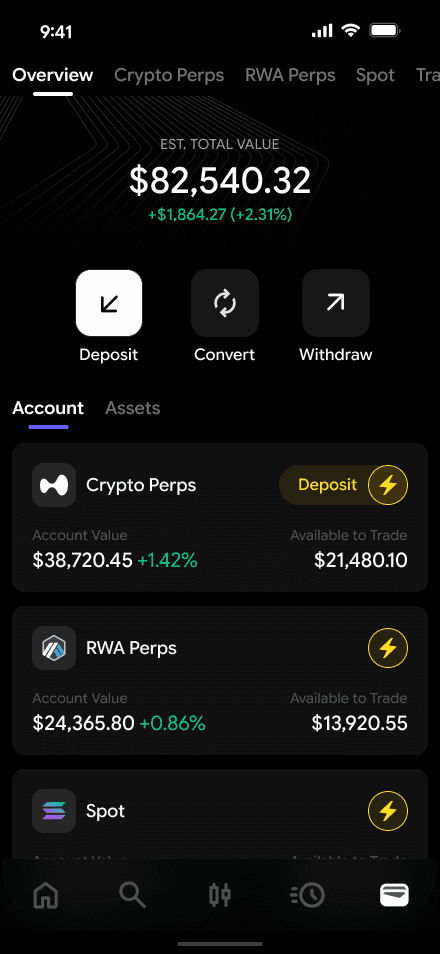
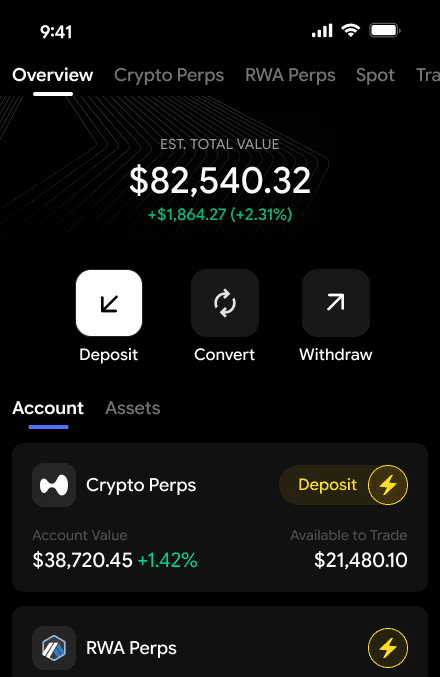
After
Clear separation between Assets and Available to Trade balance.
Users can see which product holds their funds.
Better transparency helps users track where their deposits are allocated.
After
Clear separation between Assets and Available to Trade balance.
Users can see which product holds their funds.
Better transparency helps users track where their deposits are allocated.
Information Architecture
Information Architecture
Information Architecture
2/7
2/7
Why the Deposit Experience Was Confusing for Users
Why the Deposit Experience Was Confusing for Users
Users often struggled to understand which deposit method or network they should choose when trying to fund their account.
Since the platform supports multiple products across different networks, users were unsure which asset or chain was required for the product they wanted to trade. The presence of multiple payment methods and crypto options also created decision friction, especially for first-time users.
This confusion made the deposit process feel complex and increased hesitation, leading to higher drop-off rates during the deposit flow.
To solve this, we simplified the deposit experience by structuring deposit options more clearly and guiding users toward the correct deposit method based on the product they want to use, reducing friction and improving deposit success rates.
Users often struggled to understand which deposit method or network they should choose when trying to fund their account.
Since the platform supports multiple products across different networks, users were unsure which asset or chain was required for the product they wanted to trade. The presence of multiple payment methods and crypto options also created decision friction, especially for first-time users.
This confusion made the deposit process feel complex and increased hesitation, leading to higher drop-off rates during the deposit flow.
To solve this, we simplified the deposit experience by structuring deposit options more clearly and guiding users toward the correct deposit method based on the product they want to use, reducing friction and improving deposit success rates.
Users often struggled to understand which deposit method or network they should choose when trying to fund their account.
Since the platform supports multiple products across different networks, users were unsure which asset or chain was required for the product they wanted to trade. The presence of multiple payment methods and crypto options also created decision friction, especially for first-time users.
This confusion made the deposit process feel complex and increased hesitation, leading to higher drop-off rates during the deposit flow.
To solve this, we simplified the deposit experience by structuring deposit options more clearly and guiding users toward the correct deposit method based on the product they want to use, reducing friction and improving deposit success rates.
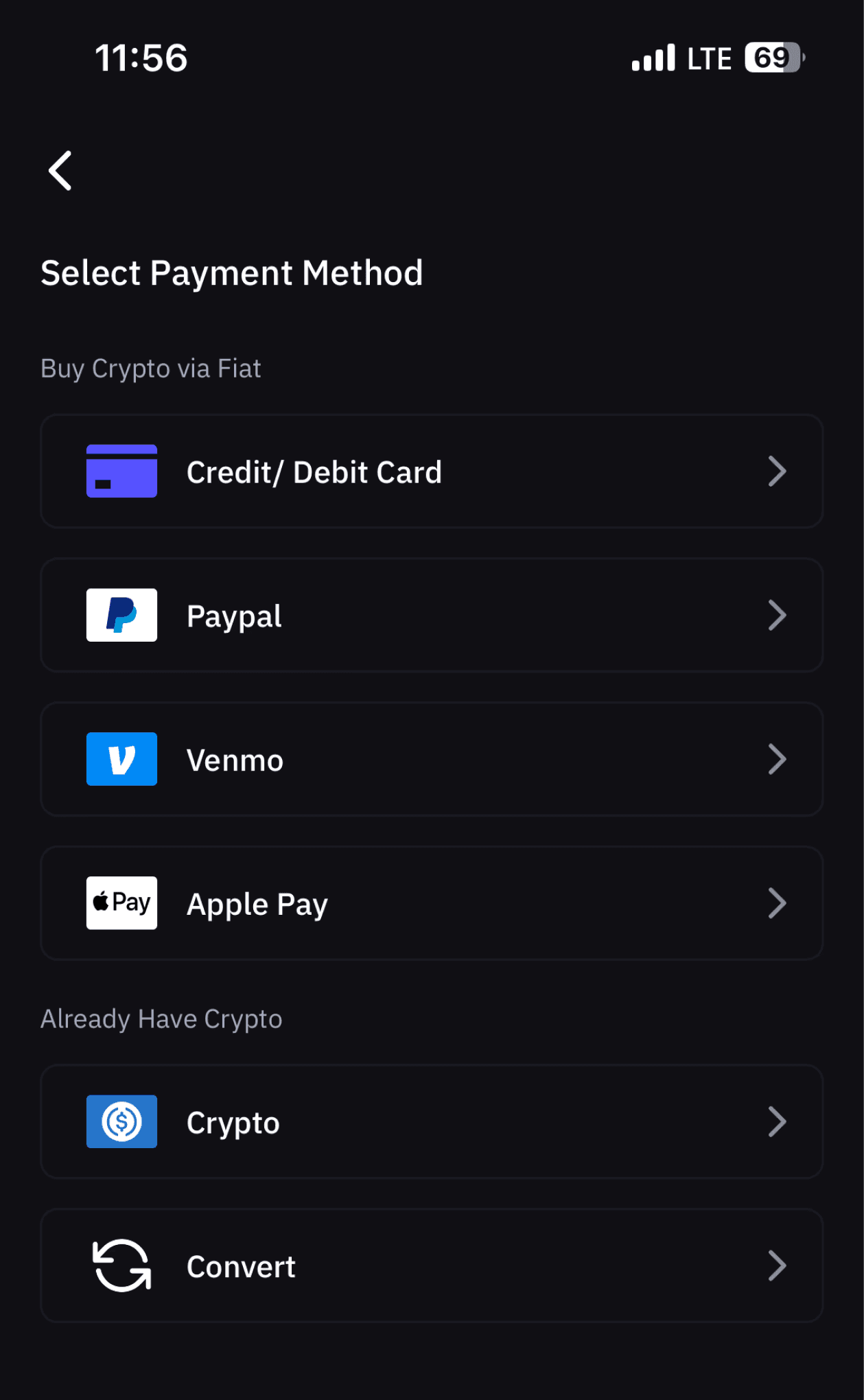
This screen forces users to decide how to deposit before understanding where their money will go, increasing hesitation and drop-offs.
This screen forces users to decide how to deposit before understanding where their money will go, increasing hesitation and drop-offs.
Users were often confused on this screen because there was no clear recommended option for depositing funds. With multiple choices shown, users were unsure which option they should select. Another problem was that different deposit types were mixed together. Fiat purchase methods (Card, PayPal, Apple Pay), crypto deposits, and Convert were all shown in the same list, even though they serve different user intentions. The Convert option was also misleading. Users coming from the Deposit button expected to add funds, but Convert requires an existing balance. Since many users had $0 balance, this could lead to confusion and a dead end. Because of this, users struggled to understand the correct path to deposit funds, which increased hesitation and drop-offs.
Users were often confused on this screen because there was no clear recommended option for depositing funds. With multiple choices shown, users were unsure which option they should select. Another problem was that different deposit types were mixed together. Fiat purchase methods (Card, PayPal, Apple Pay), crypto deposits, and Convert were all shown in the same list, even though they serve different user intentions. The Convert option was also misleading. Users coming from the Deposit button expected to add funds, but Convert requires an existing balance. Since many users had $0 balance, this could lead to confusion and a dead end. Because of this, users struggled to understand the correct path to deposit funds, which increased hesitation and drop-offs.
3/7
3/7
Introducing Fast Forward
Introducing Fast Forward
To reduce confusion in the deposit flow, we introduced a new option called Fast Forward. This allows users to directly deposit USDC into the correct network for a specific product, without needing to manually figure out which asset or chain to select.
To reduce confusion in the deposit flow, we introduced a new option called Fast Forward. This allows users to directly deposit USDC into the correct network for a specific product, without needing to manually figure out which asset or chain to select.
To reduce confusion in the deposit flow, we introduced a new option called Fast Forward. This allows users to directly deposit USDC into the correct network for a specific product, without needing to manually figure out which asset or chain to select.
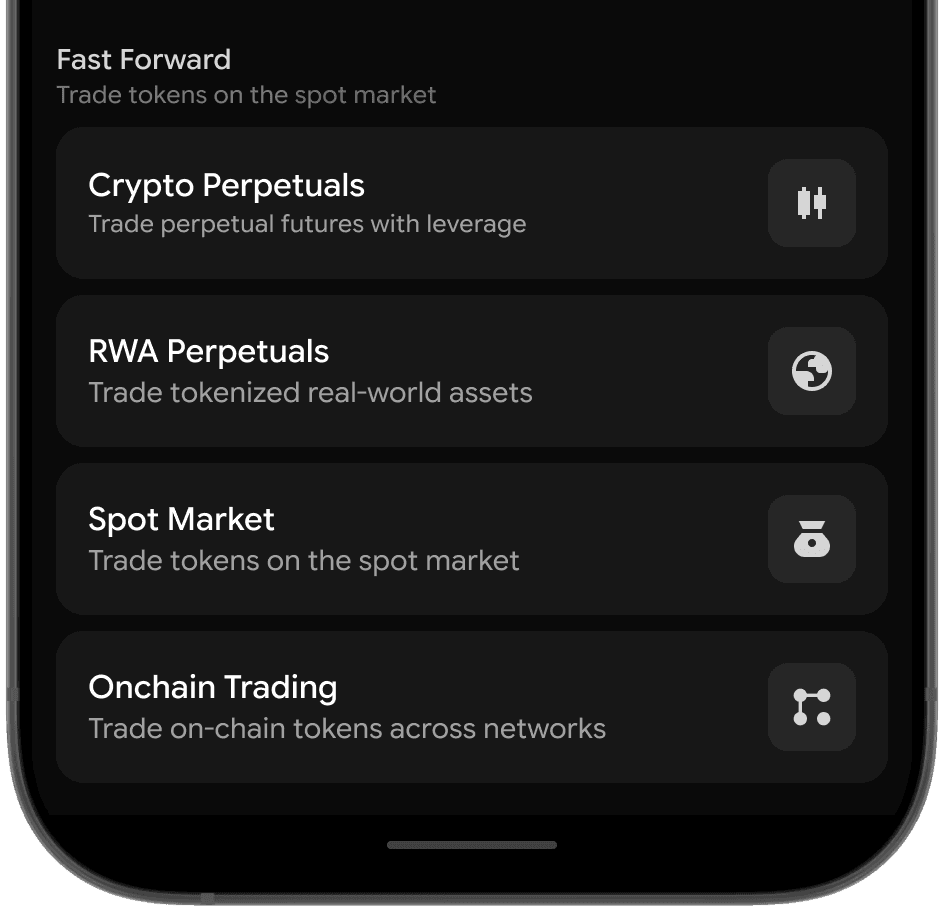
Fast Forward lets users directly deposit USDC into the correct network for the product they want to trade.
Instead of navigating through multiple steps like selecting tokens, networks, and conversions, users can simply choose the product they want to trade (Crypto Perps, RWA Perps, Spot, or Onchain), and the system automatically guides them to deposit the correct USDC on the required network.
This approach simplifies the decision-making process, reduces friction for first-time users, and helps users start trading faster by depositing funds directly into the right product environment.
Instead of navigating through multiple steps like selecting tokens, networks, and conversions, users can simply choose the product they want to trade (Crypto Perps, RWA Perps, Spot, or Onchain), and the system automatically guides them to deposit the correct USDC on the required network.
This approach simplifies the decision-making process, reduces friction for first-time users, and helps users start trading faster by depositing funds directly into the right product environment.
Instead of navigating through multiple steps like selecting tokens, networks, and conversions, users can simply choose the product they want to trade (Crypto Perps, RWA Perps, Spot, or Onchain), and the system automatically guides them to deposit the correct USDC on the required network.
This approach simplifies the decision-making process, reduces friction for first-time users, and helps users start trading faster by depositing funds directly into the right product environment.
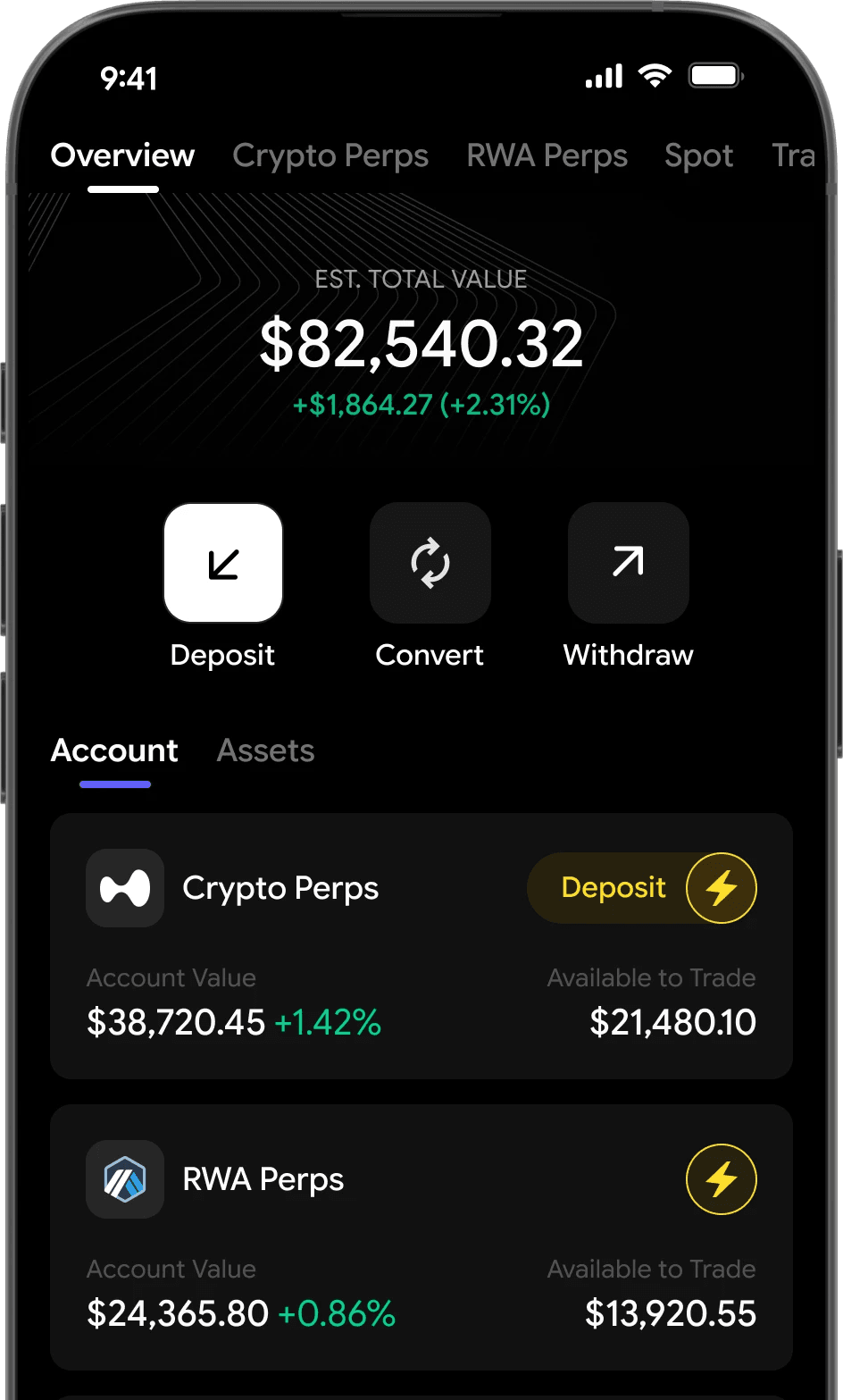
Product-based Fast Forward deposit
Product-based Fast Forward deposit Previously, users had to manually figure out which asset and network to use for each product. The Fast Forward option allows users to choose the product first (Crypto Perps, RWA Perps, Spot, Onchain), and the system guides them to deposit USDC into the correct network, removing the need to understand complex chain details.
Product-based Fast Forward deposit
Product-based Fast Forward deposit Previously, users had to manually figure out which asset and network to use for each product. The Fast Forward option allows users to choose the product first (Crypto Perps, RWA Perps, Spot, Onchain), and the system guides them to deposit USDC into the correct network, removing the need to understand complex chain details.
Product-based Fast Forward deposit
Product-based Fast Forward deposit Previously, users had to manually figure out which asset and network to use for each product. The Fast Forward option allows users to choose the product first (Crypto Perps, RWA Perps, Spot, Onchain), and the system guides them to deposit USDC into the correct network, removing the need to understand complex chain details.
4/7
4/7
Clear Deposit Entry Point
Clear Deposit Entry Point
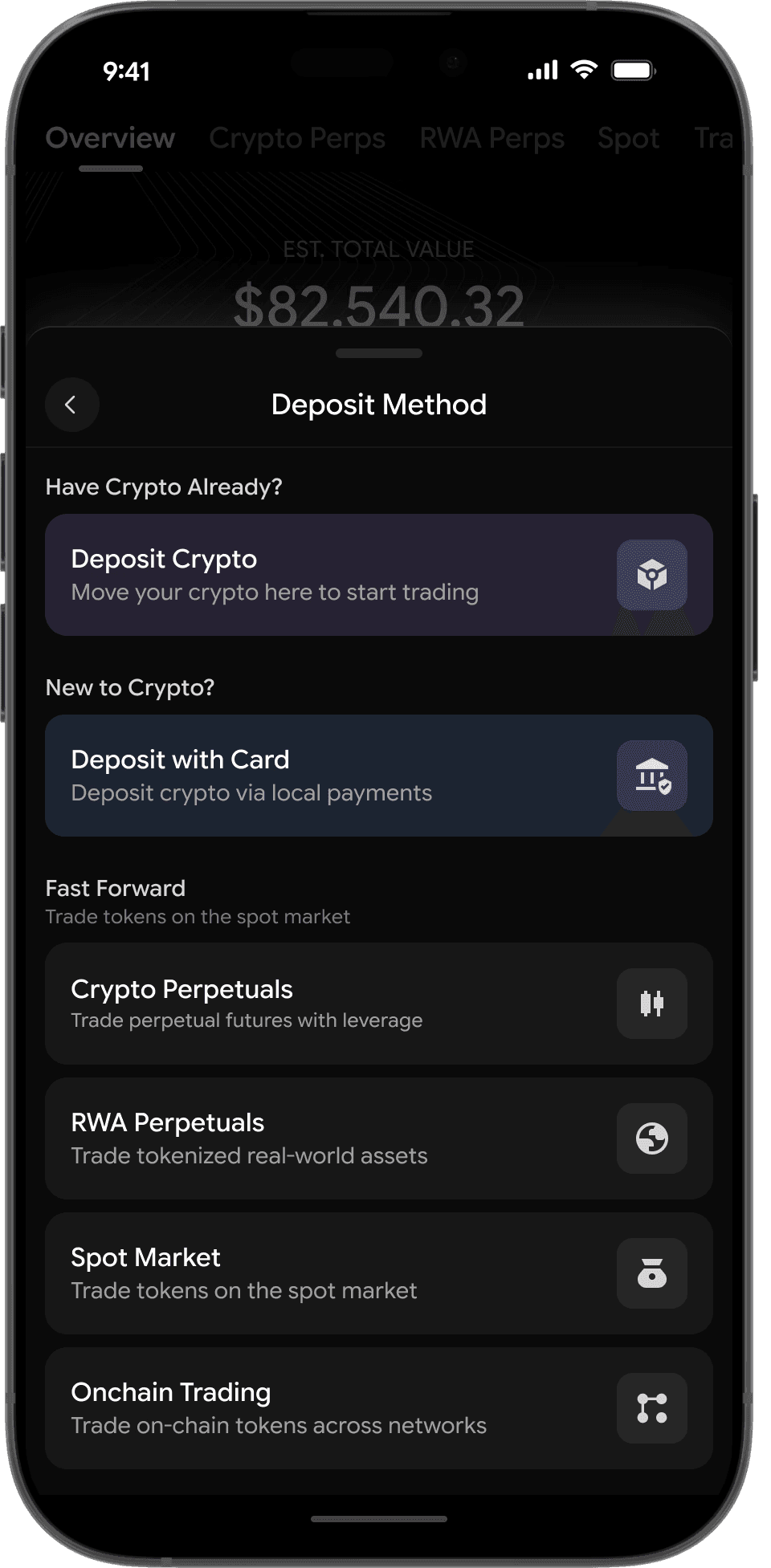
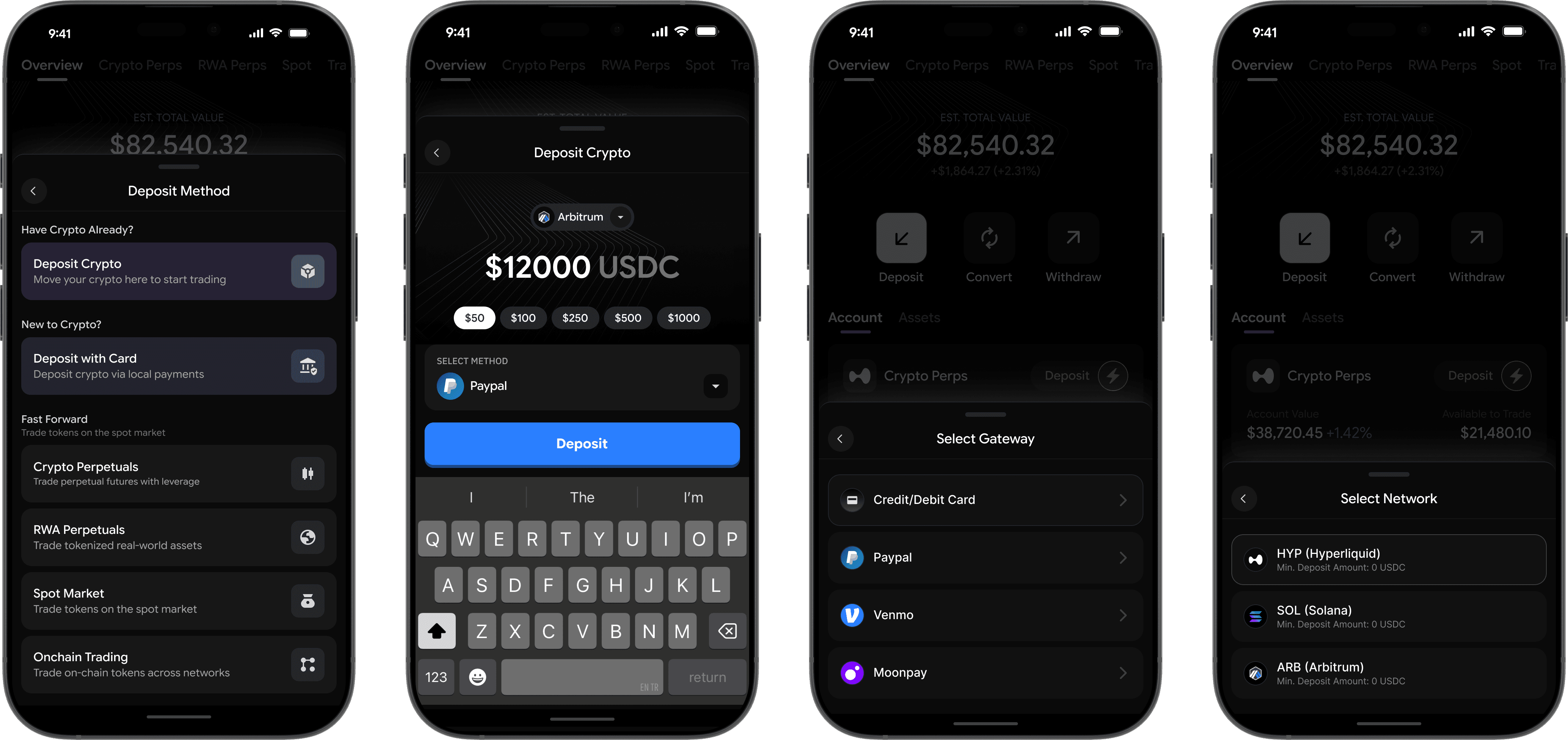
Clear deposit entry (Deposit Method screen) Earlier, users saw many mixed deposit options and didn’t know which one to choose. This screen separates users based on their situation — users who already have crypto, users who want to buy with fiat, and users who want to directly fund a product through Fast Forward. This reduces decision confusion and gives users a clear starting point.
Clear deposit entry (Deposit Method screen) Earlier, users saw many mixed deposit options and didn’t know which one to choose. This screen separates users based on their situation — users who already have crypto, users who want to buy with fiat, and users who want to directly fund a product through Fast Forward. This reduces decision confusion and gives users a clear starting point.
First, it separates users into two clear paths: “Have Crypto Already?” and “New to Crypto?”.
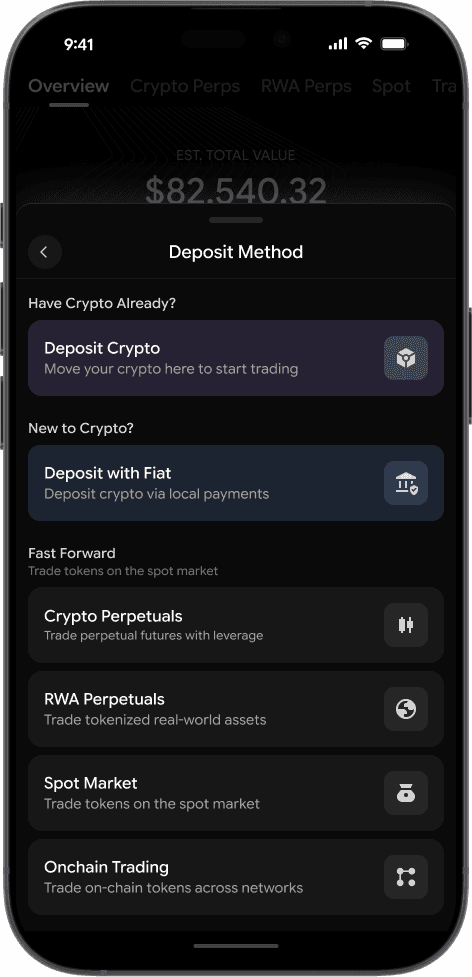
Second, different deposit types are grouped logically instead of mixed together. Crypto deposits, fiat purchases, and product-based deposits are presented in separate sections, making the flow easier to understand.
Second, different deposit types are grouped logically instead of mixed together. Crypto deposits, fiat purchases, and product-based deposits are presented in separate sections, making the flow easier to understand.
The Convert option was removed from the deposit decision screen, preventing users with a $0 balance from accidentally selecting it and reaching a dead end.
The Convert option was removed from the deposit decision screen, preventing users with a $0 balance from accidentally selecting it and reaching a dead end.
5/7
5/7
Deposit Using Existing Crypto
Deposit Using Existing Crypto
Users who already have crypto can directly deposit their funds into the platform. Instead of navigating through multiple options, they are taken to a clear receive screen where they can scan a QR code or copy the wallet address.
Users who already have crypto can directly deposit their funds into the platform. Instead of navigating through multiple options, they are taken to a clear receive screen where they can scan a QR code or copy the wallet address.
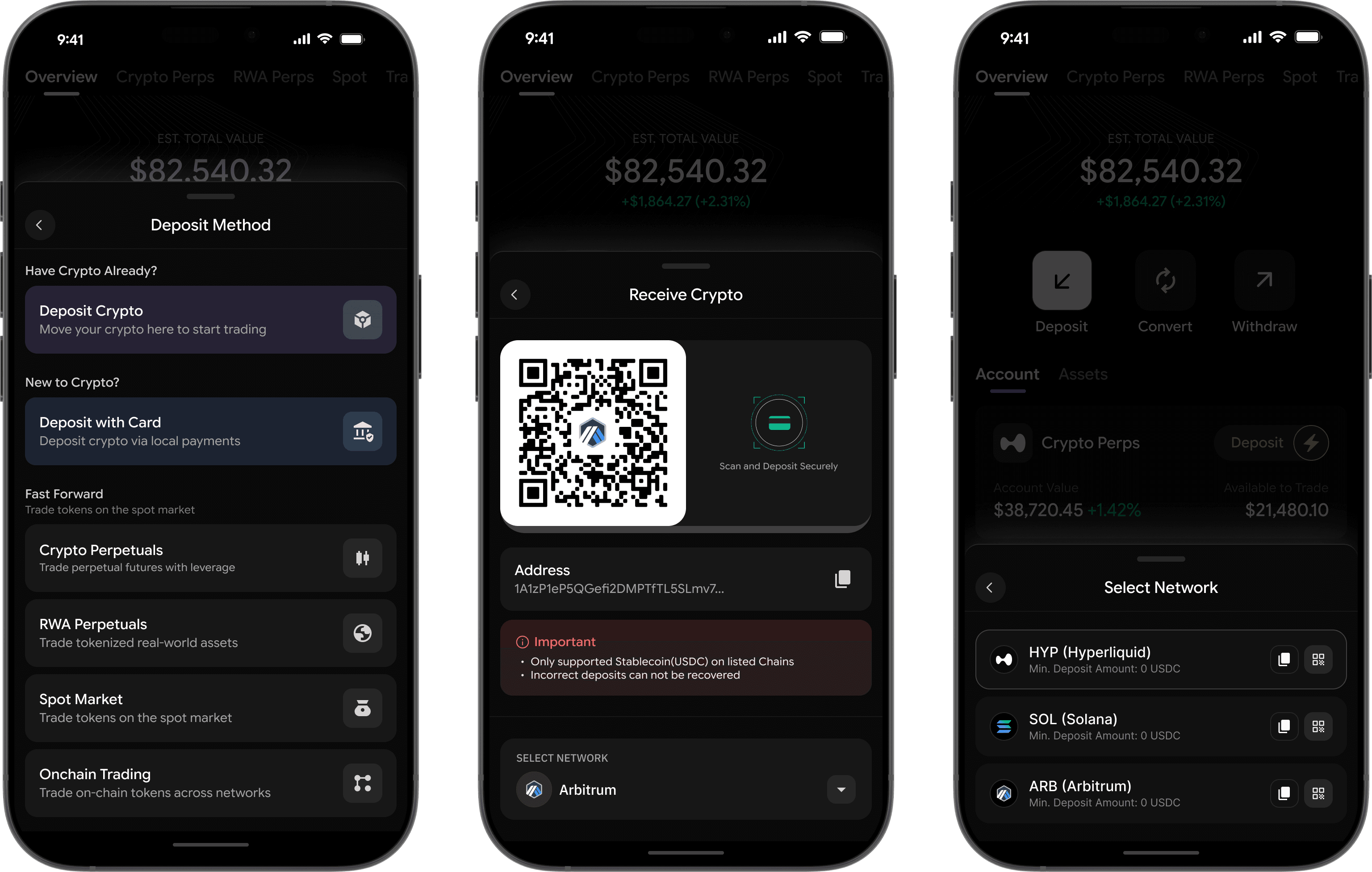
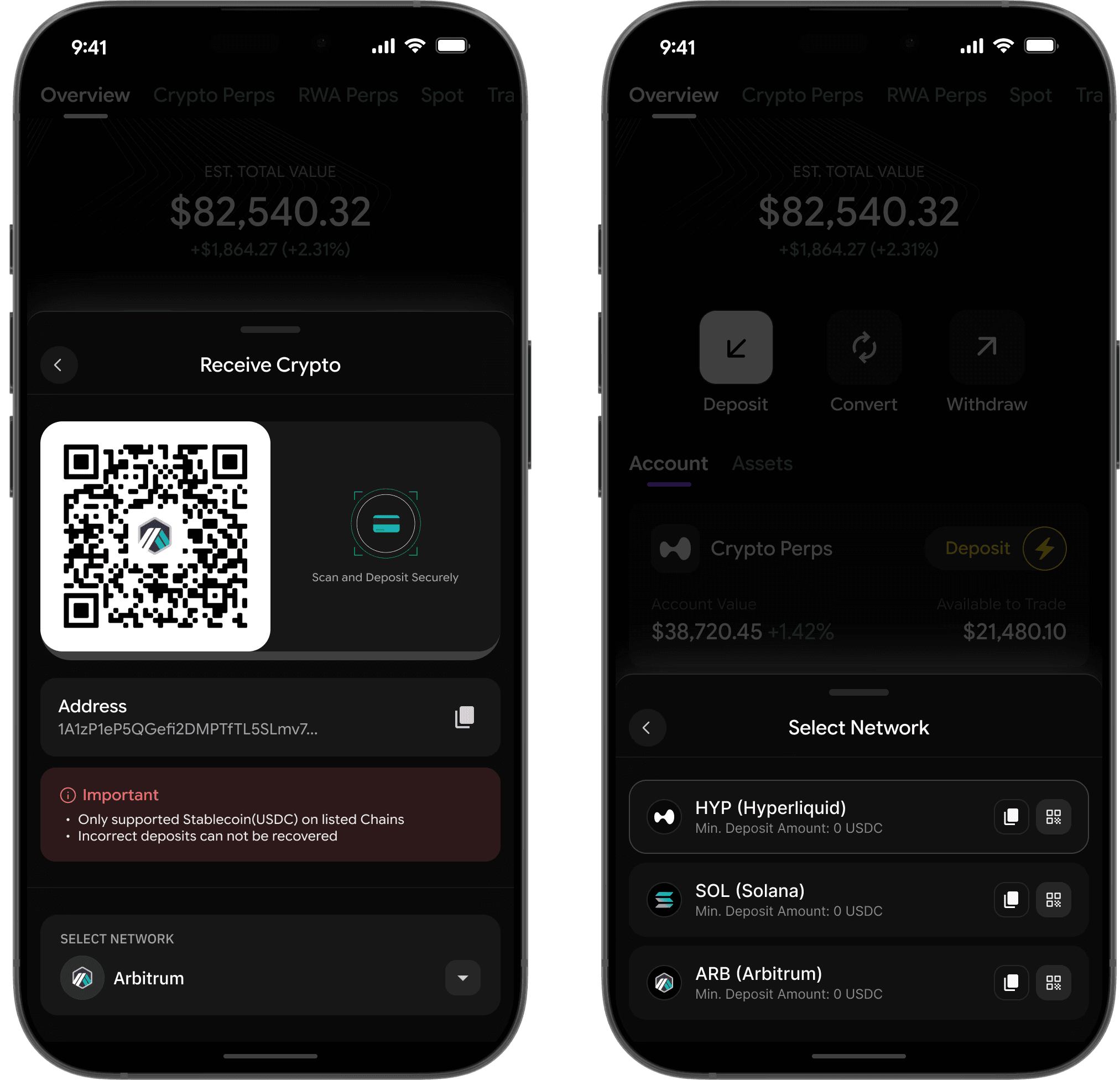
Users can also select the correct network before depositing, ensuring that funds are sent on the supported chain. This reduces the chances of sending assets to the wrong network and makes the deposit process faster and safer for experienced crypto users.
Users can also select the correct network before depositing, ensuring that funds are sent on the supported chain. This reduces the chances of sending assets to the wrong network and makes the deposit process faster and safer for experienced crypto users.
7/7
7/7
Contextual Deposit Suggestion
Contextual Deposit Suggestion
When new users land on the trade page without any funds, we show a contextual bottom sheet suggesting the correct USDC deposit for that specific product and network.
When new users land on the trade page without any funds, we show a contextual bottom sheet suggesting the correct USDC deposit for that specific product and network.
When new users land on the trade page without any funds, we show a contextual bottom sheet suggesting the correct USDC deposit for that specific product and network.
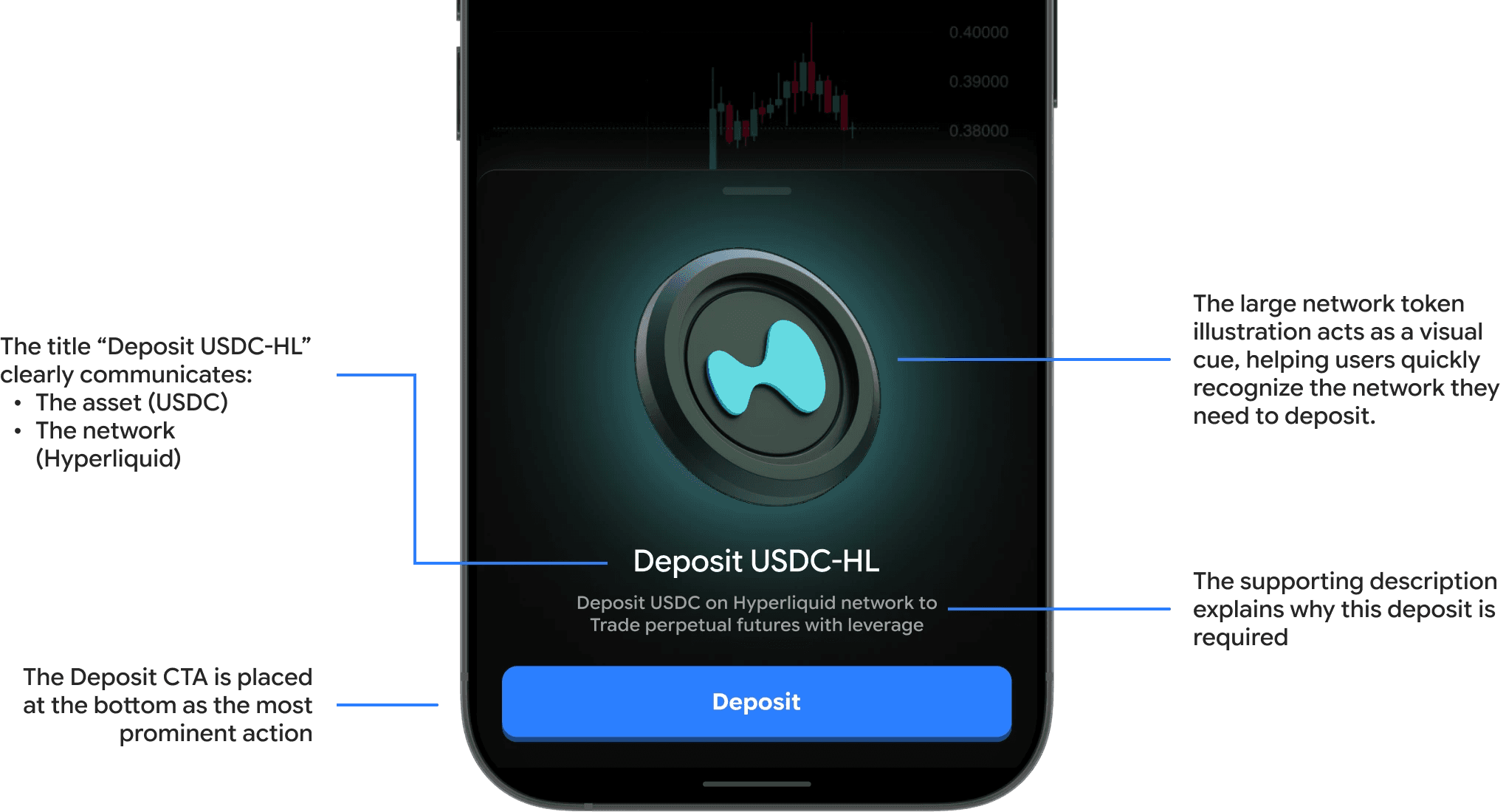
Instead of expecting users to figure out which asset or chain they need, the system automatically recommends the correct deposit such as USDC-HL for Crypto Perps or Spot, USDC-ARB for RWA Perps, and USDC-SOL for On-chain trading.
This guidance helps users understand where they need to deposit funds to start trading, reducing confusion around networks and assets while making the onboarding experience faster and more intuitive.
Instead of expecting users to figure out which asset or chain they need, the system automatically recommends the correct deposit such as USDC-HL for Crypto Perps or Spot, USDC-ARB for RWA Perps, and USDC-SOL for On-chain trading.
This guidance helps users understand where they need to deposit funds to start trading, reducing confusion around networks and assets while making the onboarding experience faster and more intuitive.
Instead of expecting users to figure out which asset or chain they need, the system automatically recommends the correct deposit such as USDC-HL for Crypto Perps or Spot, USDC-ARB for RWA Perps, and USDC-SOL for On-chain trading.
This guidance helps users understand where they need to deposit funds to start trading, reducing confusion around networks and assets while making the onboarding experience faster and more intuitive.
6/7
6/7
Deposit Using Existing Crypto
Deposit Using Existing Crypto
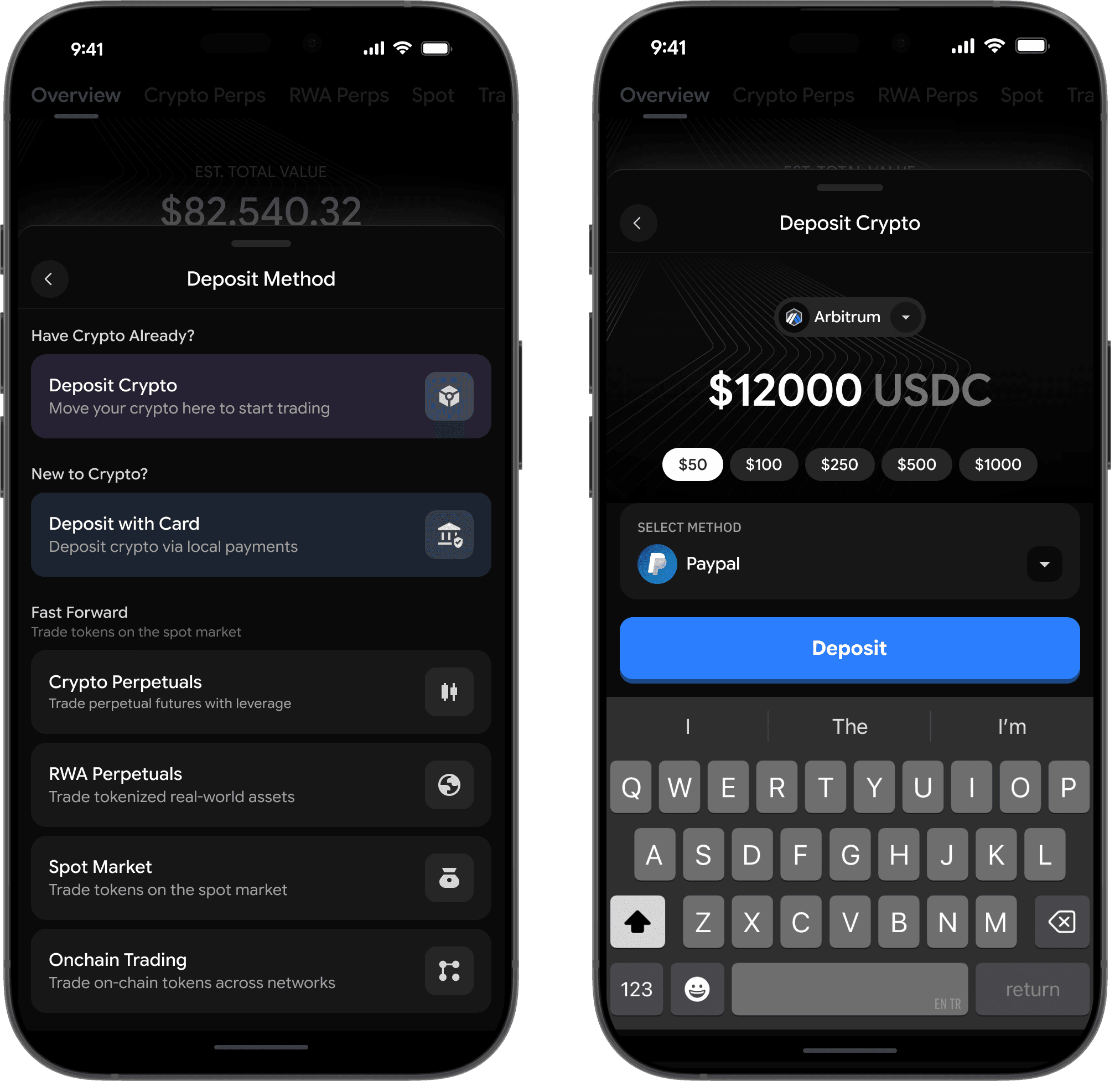
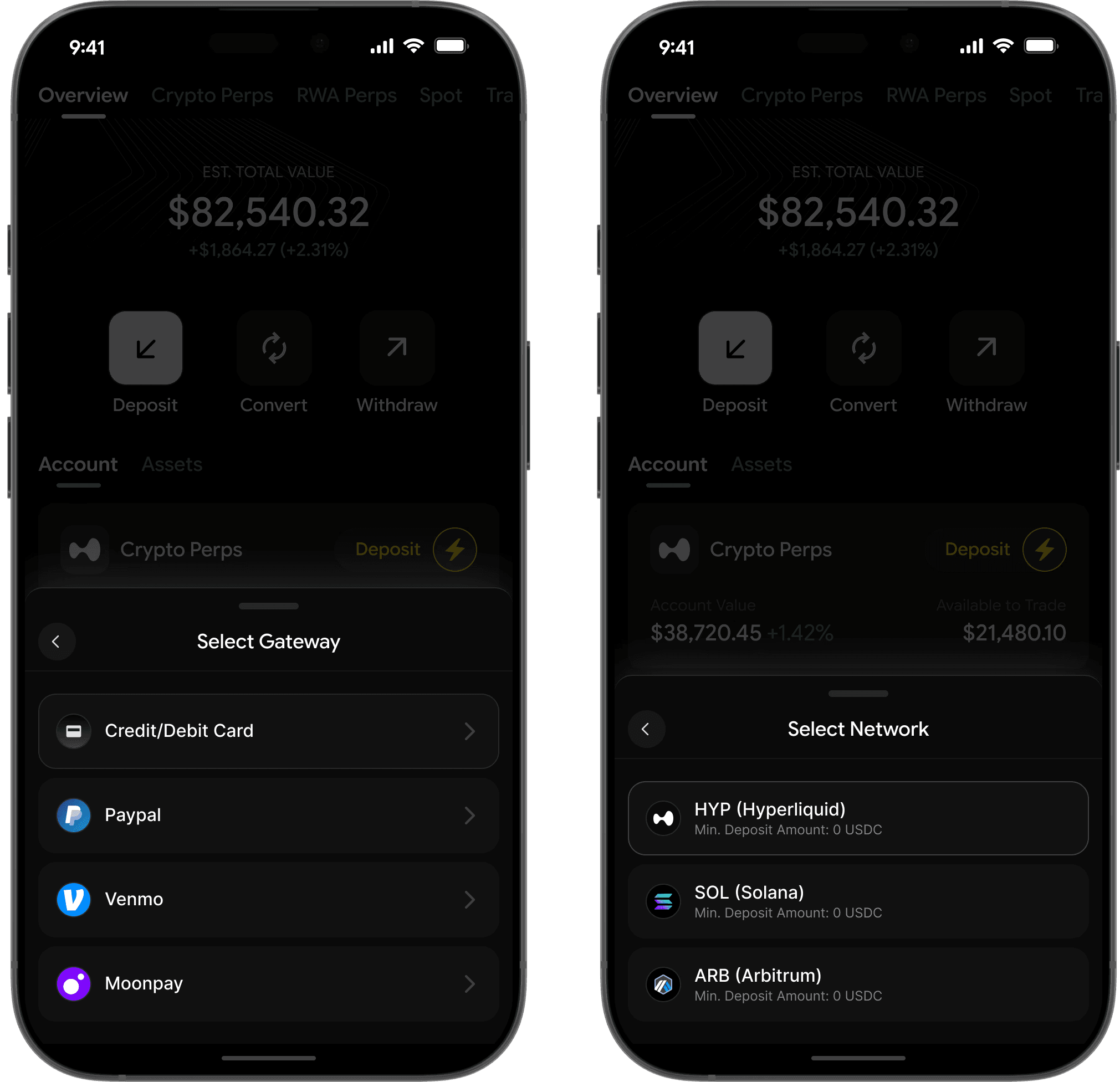
Fiat payment gateways are grouped together under “Deposit via Fiat”, allowing users to easily convert their fiat currency into USDC. From here, users first select their preferred payment gateway such as Card, PayPal, Venmo, or Moonpay.
After selecting the gateway, users are taken to the Deposit Crypto screen, where they can enter the amount directly in USDC instead of dollars ($). This helps users clearly understand the exact amount of USDC they will receive after fees and deductions, improving clarity in the final deposit amount.
On this screen, users also have the option to change the deposit network depending on the product they want to use. If needed, they can also switch the payment gateway without going back to the previous screen, giving them more flexibility and control during the deposit process.
Fiat payment gateways are grouped together under “Deposit via Fiat”, allowing users to easily convert their fiat currency into USDC. From here, users first select their preferred payment gateway such as Card, PayPal, Venmo, or Moonpay.
After selecting the gateway, users are taken to the Deposit Crypto screen, where they can enter the amount directly in USDC instead of dollars ($). This helps users clearly understand the exact amount of USDC they will receive after fees and deductions, improving clarity in the final deposit amount.
On this screen, users also have the option to change the deposit network depending on the product they want to use. If needed, they can also switch the payment gateway without going back to the previous screen, giving them more flexibility and control during the deposit process.
Fiat payment gateways are grouped together under “Deposit via Fiat”, allowing users to easily convert their fiat currency into USDC. From here, users first select their preferred payment gateway such as Card, PayPal, Venmo, or Moonpay.
After selecting the gateway, users are taken to the Deposit Crypto screen, where they can enter the amount directly in USDC instead of dollars ($). This helps users clearly understand the exact amount of USDC they will receive after fees and deductions, improving clarity in the final deposit amount.
On this screen, users also have the option to change the deposit network depending on the product they want to use. If needed, they can also switch the payment gateway without going back to the previous screen, giving them more flexibility and control during the deposit process.
Key Results After the Redesign
Key Results After the Redesign
We used Mixpanel to track and analyze user behavior across the deposit flow. Data was collected and compared for the period of November to December 2025, which helped us measure drop-offs, successful deposits, and improvements after the redesign.
38%
38%
Deposit Flow Drop-offs
40%
40%
Deposits via Fast Forward
Deposits via Fast Forward
+21%
+21%
First-Time User Deposits
First-Time User Deposits
+27%
+27%
Users Starting Trades
After Deposit
Users Starting Trades
After Deposit
↓ 38%
↓ 38%
Deposit Flow Drop-offs
40%
40%
Deposits via Fast Forward
Deposits via Fast Forward
+21%
+21%
First-Time User Deposits
First-Time User Deposits
+27%
+27%
Users Starting Trades
After Deposit